Sunday, 22 March 2015

7 Common Molecular Gastronomy Techniques


Sous-Vide: Translated as “under vacuum,” this French term means that the food (usually meat or vegetables) has been cooked in an airtight plastic bag submerged in a temperature-controlled water bath for a very long time. Food prepared this way is always cooked evenly, with both the inside and outside equally tender.


Flash Frozen: With this molecular gastronomy technique, food is frozen almost immediately often by using liquid nitrogen. This allows the water inside fruits, vegetables and other fruits to freeze without creating large crystals or damaging the cell membranes, thus preserving the texture of frozen foods (which would otherwise be mushy when defrosted).


Faux Caviar: Using a process known as spherification, liquid food like olive oil, tea and fruit juice can be turned into tiny little balls that look like caviar. The liquid is held in its shape by a thin gel membrane and enjoyed as a solid.


Deconstructed: If you deconstruct a sand castle, you knock it down. This same idea applies to deconstructed dishes, which feature separate building blocks instead of having everything combined. Deconstructed dishes allow the diner to construct a customized experience in his or her mouth.


Edible Paper: Made with potato starch and soybeans, these tasty sheets of paper are often printed with edible fruit inks from a laser printer.


 Powdered Food: Chefs use maltodextrin, a starch-like substance, to turn a high-fat liquid like olive oil into a powder.

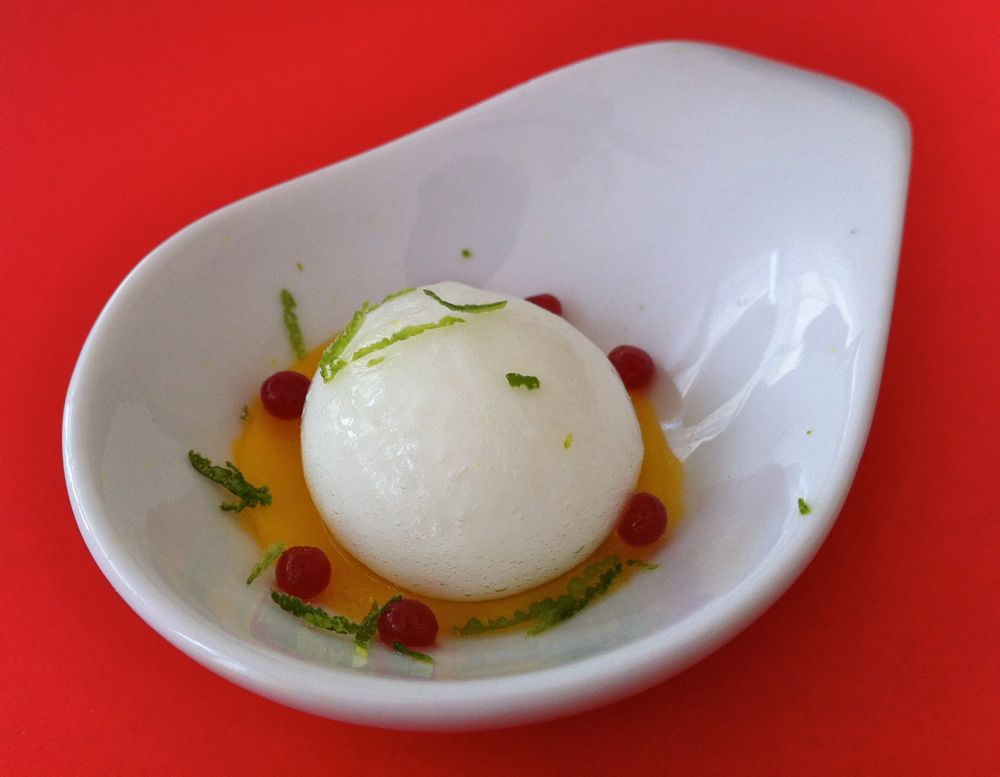
Foams: If you’ve ever had a meringue on top of a pie, you’ve eaten a foam. Chefs are now turning fruits, vegetables and cheese into foams using food stabilizers and thickening agents.

New York Chefs That Dislike Molecular Gastronomy

To get a chef all worked up? Just ask him for his thoughts on molecular gastronomy, the strange cooking style that uses highly scientific techniques and ingredients to make other-worldly, modern cuisine. It's perhaps more popular in Spain and Chicago (and onTop Chef) than it is in NYC restaurants, but most culinary professionals in this city still have strong opinions about it, even if they don't cook that kind of food, or eat it often.
Many love the cuisine, but hate the name. Others think it's pretentious, overrated, or just "over" in general. But for whatever reason, chefs just love to talk about it. Here's a collection of soundbites from 15 top toques about molecular gastronomy.


2011_wylie_dufresne_molecular1.jpg
1) Wylie Dufresne: "What does it even mean? What does it mean when you say to your wife, 'Hey we're going out to dinner tonight. Do you want Chinese, Italian or molecular gastronomy?'" [~EN~]
2010_04TKql2.jpg

2) Thomas Keller: "Well, remember, molecular gastronomy is something the media has used as a phrase to identify a new style of food. It’s not something any of the cooks that are doing it have ever said about the food they do." [Gilded Fork]
2011_chris_santos1.jpg

3) Chris Santos: "A lot of times people ask me about new trends in cooking, like molecular gastronomy, and I say, ‘Just give me some fire and I’ll give you some good food.'" [Zagat]

2011_david_chang_molecular1.jpg
4) David Chang: "It's never going to lose the name molecular. Hippies don't like being called hippies, but that's what everyone knows them by." [Time]

2011_michael_laiskonis1.jpg
5) Michael Laiskonis: "While I embrace the spirit of what some term 'molecular gastronomy' and respect the serious practitioners of that style, I worry about the next generation of cooks coming up that might attach themselves too closely to it out of fashion, while ignoring the more basic fundamentals of cooking." [RG]
2011_johnny_z_12.jpg

6) Johnny Iuzzini (on being called a "Molecular Gastronomist"): "That is such a horrible term, just because you have a modern style and use some modern techniques does not mean that you are a molecular gastronomist! That term doesn't sound delicious at all!" [Global Chefs]

tonybourdain11.jpg
7) Anthony Bourdain: "“It doesn’t sound like anything I would be in the mood for. The majority of people do it clumsily or badly. But when you complain about, you’re like my grandparents complaining about the electric guitar." [TSU]
2011_eric_ripert_molecular1.jpg
8) Eric Ripert: "Molecular for molecular, cooking for the technique, I think that is over." [The Feast]


daniel-boulud-divorce-1501.jpg
9) Daniel Boulud: "Molecular gastronomy is interesting for the mind, but not always interesting for the soul. It's very much like conceptual art. It triggers many senses, which are not known by yourself, but at the same time it doesn't leave you wanting to come back." [Vancouver Sun]

2011_jimmy_bradley1.jpg
10) Jimmy Bradley: "It’s not for me to say, but you won’t see me messing around with it." [RG]

2011_dan_kluger1.jpg
11) Dan Kluger: "I think there's certainly a place for molecular gastronomy and really high end cuisine. But for me, making great tasting food is why I'm here." [Star Chefs]

2010_04_lionmenu1.jpg
12) John Delucie: "Molecular gastronomy is lost on me. I don’t want to eat                                         xantham gum and I am not captivated by a technology that’s gives us bacon                                         ice cream. I prefer chocolate." [RG]

2011_alainducasse_molcular.jpg
      13) Alain Ducasse: "I prefer to be able to identify what I'm eating. I have                                               to know. It's `wow' effect food, virtual food. If we were surrounded by                                                  these restaurants, we would be in trouble." [Bloomberg]

2011_joel_molecular1.jpg

14) Joel Robuchon: "Too many chefs are attracted to molecular gastronomy... It’s not the kind of cuisine that should be important, with all the additives. I know I was really the first one to make it famous, but I have complete control of what I’m doing." [NYP]
2011_cny_eddie_huang11.jpg

 15) Eddie Huang: "Me and @No7restaurant love molecular gastronomy                                           but only if it involves astronaut ice cream." [Twitter]

Eponymous recipes

New dishes named after famous scientists includes:


  • Gibbs - infusing vanilla pods in egg white with sugar, adding olive oil and then microwave cooking. Named after physicist Josiah Willard Gibbs (1839–1903).


  • Vauquelin - using orange juice or cranberry juice with added sugar when whipping eggs to increase the viscosity and to stabilize the foam, and then microwave cooking. Named after Nicolas Vauquelin (1763–1829), one of Lavoisier's teachers.


  • Baumé - soaking a whole egg for a month in alcohol to create a coagulated egg. Named after the French chemist Antoine Baumé (1728–1804).


Saturday, 7 March 2015

References

This, H. Molecular Gastronomy a Scientific Look At Cooking. (n.d). Retrieved from https://www.agroparistech.fr/IMG/pdf/Molecular_Gastronomy_revise_texte_seul.pdf

Vartiainen, J.,Aksela, M. & Hopia, A. (2013). Introduction to molecular gastronomy and to its applications in science education. Retrieved from www.luma.fi/file_download/179

Snitkjær, P. (November 2010). Investigations of meat stock from a Molecular Gastronomy perspective. Retrieved from http://curis.ku.dk/ws/files/32448394/PHD.0111.pdf

Ivanovic, S., Mikinac, K. & Perman, L. (2011). MOLECULAR GASTRONOMY IN FUNCTION OF SCIENTIFIC IMPLEMENTATION IN PRACTICE. Retrieved from http://utmsjoe.mk/files/Vol.2%20No.2/0-2-2-3-Ivanovic-Mikinac-Perman-_Molekularna_gastr.pdf

Organic authority. (n.d). Retrieved from http://www.organicauthority.com/foodie-buzz/molecular-gastronomy-techniques-explained.html

Out for a long lunch. (n.d). Retrieved from http://outforalonglunch.com/tag/chinese-molecular-gastronomy

Have your cake and eat it too. (n.d). Retrieved from http://fatboyrecipes.blogspot.com/2009/04/molecular-gastronomic-dinner-by-chef.html

Wah, L, C. (2008). The Science of deliciousness. Retrieved from http://www.thestar.com.my/story/?file=%2F2008%2F1%2F27%2Flifeliving%2F20139204

Molecular gastronomy is a scientific discipline. (n.d). Retrieved from http://www.flavourjournal.com/content/2/1/1

Building food, molecule by molecule. (2014). Retrieved from http://www.prospectmagazine.co.uk/features/herve-this-the-worlds-weirdest-chef
Y, G, S. & Struwe, K. (n.d). Deconstructing Molecular Gastronomy. Retrieved from https://kitchen-theory.com/wp-content/uploads/2011/10/Deconstructing-Molecular-Gastronomy.pdf

Food for tomorrow. (n.d) Retrieved from http://www.ncbi.nlm.nih.gov/pmc/articles/PMC1679779/

Molecular economy, the food of the future? (2009). Retrieved from http://inside.capitaland.com/gourmet/156-molecular-gastronomy-food-of-the-future

Modern Cooking & the Erice Workshops on Molecular & Physical Gastronomy. (n.d). Retrieved from http://curiouscook.typepad.com/site/erice.html

‘Father of molecular gastronomy’ explores solution to world hunger. (n.d). Retrieved from http://www.bostonglobe.com/lifestyle/food-dining/2014/11/11/this-not-whole-egg-that-not-bacon/WN3mEBTcvBKpD1278Uj3DM/story.html

Harris, W. (n.d). How molecular gastronomy works. Retrieved from http://science.howstuffworks.com/innovation/edible-innovations/molecular-gastronomy.htm

Molecular gastronomy: Science behind the art of cooking. (2011). Retrieved from http://www.sciencedaily.com/releases/2011/07/110706122618.htm

From Chemistry Labs to the Kitchen: Molecular Gastronomy. (n.d). Retrieved from http://illumin.usc.edu/147/from-chemistry-labs-to-the-kitchen-molecular-gastronomy/

Molecular Gastronomy: A New Emerging Scientific Discipline. (2010). Retrieved from http://www.ncbi.nlm.nih.gov/pmc/articles/PMC2855180/

Warwicker, M. (2014). Kitchen science: What 'molecular cuisine' has taught us. Retrieved from http://www.bbc.co.uk/food/0/27243852

Chef blows off hands dabbling in 'molecular gastronomy'.(2009). Retrieved from http://www.thelocal.de/20090713/20575


Morabito, G. (2011). 15 New York Chefs That Don't Like 'Molecular Gastronomy. Retrieved from http://ny.eater.com/2011/3/7/6694029/15-new-york-chefs-that-dont-like-molecular-gastronomy


Thursday, 5 March 2015

Conclusion

Molecular gastronomy is a new gourmet direction connecting the catering kitchen and laboratory, and thus creates new flavors, forms of unprecedented. It can be, of course, understood as a process of application of science in everyday cooking. Methods and means for obtaining the final products in the molecular gastronomy request the knowledge of the chemical and physical processes.

Of course, the introduction of molecular gastronomy requests, too, and some modifications in the approach to guests, number of courses of which every dish is extremely small - the art on a plate, losing the concept of menus and menu, while the duration of a meal takes several times longer. Certainly, this approach also affects the habits of the people towards healthy eating, where it is no longer considered to be a meal consumed in a shorter time, but the opposite, and making sure the food is consumed, and thus affects the reduction of today's problems related to overweight-obese population.

Modern molecular gastronomy shows the tendency toward further progress and popularization, but a noticeable impact on the so-called ''Molecular mixology'', and molecular approach to the preparation of cocktails, where just as in the case of food, it is changing the physical state of food and it is searching the limits of each food. The future is unpredictable, and in which direction to go to molecular gastronomy remains to be seen.

Wednesday, 4 March 2015

Restaurant That Apply Molecular Gastronomy

There are many elements which different restaurants and standard restaurants apply molecular gastronomy. Most would expect from such restaurants chefs in lab coats, and kitchen as a laboratory. But it is far from the truth, although there is a big and obvious difference between the standard and the restaurant of molecular gastronomy. In essence, they are more restaurants, and less laboratories. 

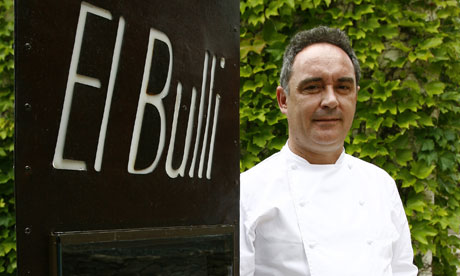
The differences are most evident in the approach and in the kitchen equipment as well as her appearance. The most famous restaurant, also the best restaurant in the world who is regarded as the main representative of the application of molecular gastronomy, El Bulli, chef Ferran Adrià.

CRITERION STANDARD RESTAURANT RESTAURANT MOLECULAR GASTRONOMY (El Bulli) Hierarchy and a strict hierarchy of specialization in one part of the cuisine (head chef, sous chef, sousier). No hierarchy. Size of food dishes medium size large to very large. Presentation of Standard 3-5 hours, sometimes more.

Those are the specifics that do not only characterize El Bulli, but also most restaurants of this type. The biggest difference is reflected in serving thirty small portions so called tasting menu. For this, there is a scientific reason because the brain after a while gets used to the taste, so it does not perceive what is consumed to such an extent after a long time, but the perception of taste becomes more automatic (although the taste is still present in the same way, the brain simply shuts down). 

For this reason, there is this way of serving dishes. In addition, it should be that in most chef-scientists there is not only one flavor, but that they alter from the primary, secondary and tertiary, i.e. perception of a certrain meal takes place in several phases.


Tuesday, 3 March 2015

Preparation of Molecular

The word to cook is described as the use of heat to transform food for consumption.The question is whether this is the only way to transform the food for consumption? Is the heat the only that can be used to cook something? When the meat is removed from the refrigerator it is dissolved, for this process the heat is also used, but for that meat we would never say that it is cooked.

 There are many ways for transforming foods in traditional gastronomy.With the development of traditional ways of trying to introduce new and innovative ways. From new ways of transformation of food used in mole are applied in the modern ''scientific'' molecular gastronomy. From new ways of transformation of food used in molecular gastronomy in everyday practice can be applied:

  • Spherification in a bath of sodium alginate and water
An innovative way of transforming food without the presence of heat. This is a technique used for making, among other things, false and reverse olive caviar. There are many variations of using this process, but the last two uses are the most often. 

During spherification the food is transformed in the way of placing them in a thin, slowly solvable membrane of sodium alginate and calcium chloride. The process of spherification in a big way introduces Spanish chef Ferran Adrià and he was one of his trademarks. For complete spherification it is required special equipment, and it consists of the following components:

 – sodium-alginate 
– salt, calcium chloride (calcium without food can not be spherificated) 
– spoons of different shapes and sizes
 – syringe without a needle (for the fake caviar)
 – water bath for stopping the process  

  • Use of liquid nitrogen
 Is a new technique in gastronomy. The temperature of liquid nitrogen is -196°C and as such has long been used mainly for various industrial purposes. Its use as a cooking technique reduces the production of ice cream and sorbet. It is a great plus in making ice cream with liquid nitrogen so that the crystals are very small due to the short time of freezing and thus ice cream made in this way has a very creamy and smooth texture. 

The concept at first, totally impossible to understand, but cooking with liquid nitrogen is nothing more than cooking in a very cold medium. Because of the large so-called ''wow effect'' the use of liquid nitrogen can be considered scientific, and especially since it is not used in traditional cuisines, but it is more innovative way for the creation of an extremely traditional preparations like ice cream or sorbet, which previously could only work because most of the cooler was not able to achieve much lower temperatures and is no more scientific to the bread making (McGee 2004). 


 Spherification in molecular gastronomy using sodium alginate in water


Using liquid nitrogen in their cooking


Monday, 2 March 2015

Molecular Gastronomy


On a daily basis, we do not realize how critical it is in preparing food as it is one of our daily routine. We tend to not questioning it when it come to the preparation process. For instance, why do we cook as we always do? Why do we only eat certain good foods? Why we avoid eating edible perfectly ingredients?


There a lots of question that need to be answer but first let take a look on what are the molecular gastronomy in particular.

Molecular gastronomy is the scientific study of food, cooking and enjoying food. It considers the chemical and physical phenomena in cooking and aims to explain changes that take place during the cooking process (This, 2009).


During 1988, the scientific discipline term has been introduced as a "molecular gastronomy" to the world and the term is being used in all around the countries. Molecular gastronomy differs from traditional food sciences where the major focus based on preservation, safety, microbiology, chemistry, engineering and physics behind cultivating and raising food.

Table 1 (Source: google image)

The table 1 above indicate how colloids molecular gastronomy works.  Colloids is a system in which finely divided particles, which are approximately 1 to 1,000 millimicrons in size, are dispersed within acontinuous medium in a manner that prevents them from being filtered easily or settled rapidly. (Source: The Free Dictionary


Sunday, 1 March 2015

Early Contributors


Antoine Laurent de Lavoisier (1743-1794)
French chemist. Recognised the importance of utilizing scientific methods to understand food.
Studied the process
of stock preparation in 1783 by measuring density to evaluate quality. His work on stocks was
evaluated.


Benjamin Thompson, Count Rumford (1753-1814)
Anglo-American physicist. His work included extensive investigations of the construction of fire places and kitchen
utensils, first part published in 1799. Count Rumford was very eager to improve the work of chefs by improving
their understanding and tools in the kitchen and he saw the potentials of using a scientific understanding to improve
cooking. In his extensive description on construction of fire places he repeatedly calls for a better understanding of
the science of cooking.


Jean Anthelme Brillat Savarin (1755-1826)
French lawyer with a background and a great interest in chemistry and medicine. Brillat Savarin is
the author of The physiology of taste from 1825, a classic book in gastronomy. The book takes a scientific and
philosophical look at food and is concerned with good food and health issues. In the book Brillat Savarin argues that
understanding science and physiology is needed to advance in gastronomy and emphasizes how much a greater
insight in this field will benefit the society.

Justus von Liebig (1803-1873)
German chemist. Did some work on meat and meat extracts. He started a production of commercial beef extract,
which was to become the precursor of the bouillon cube.

Edouard de Pomaine (1875-1964)
French scientist and food writer. He explained the scientific principles of several traditional preparation techniques
in order to demystify cooking. He argues that cooking can be rationalized and simplified, and
considered a scientific technique.



Saturday, 28 February 2015

Science Meet Kitchen

"Taste is the Sum of Quality, Experience and Imagination" - Chef Heiko AntoniewiczI

 believe that not everyone is accustom to the term gastronomy because the word itself sounds complex to comprehend for those who are not immersed in food industry.

In essence, the word "gastronomy" is derived from Ancient Greek which means "stomach", and "laws that govern". From there, it is known as "the art or law of regulating the stomach".


The term is purposely all-encompassing: it subsumes all of cooking technique, nutritional facts, food science, and everything that has to do with palatability of taste and smell as human ingestion of food stuffs goes.

Gastronomy involves discovering, tasting, experiencing, researching, understanding and writing about food preparation and the sensory qualities of human nutrition as a whole.

 It also studies how nutrition interfaces with the broader culture. Later on, the application of biological and chemical knowledge to cooking has become known as molecular gastronomy, yet gastronomy covers a much broader, interdisciplinary ground.


The video shown that how human's mind cope with the aspect of gastronomy.


Wednesday, 25 February 2015

Introduction

Assalamualaikum and greetings to everyone.

Initially, the owner of this blog is Aisyah binti Mohd Kher from DEC 5B from Kolej Profesional Mara Indera Makhota currently undertaking Diploma In English Communication. One of the fundamental subjects of my course is Digital and Mobile Communication. 

Thus, I create this blog with the purpose in completing one of the assignments for that subject. This blog entitled Gastronomy based on the concept of Science and Technology. There are numerous of new information that can be divulge through this interesting topic. Apart from completing this blog, I am hoping that you could obtain the knowledge that you desire for. 

In light of this, there are several objectives of that will be highlighted in this blog. 

1. To provide a piece of thought about where the word gastronomy originated from.

2. Using molecular gastronomy to help the readers understand the contribution of science to the society.

3. To scientifically explore the art aspect of cooking.

If there any suggestion or opinion regarding my blog, you are welcome to do so. Have a nice day ahead.